So you’ve booked your trip. Congrats! Now comes the question every first-timer (and plenty of returning guests) asks before heading to the river: what to wear on a rafting trip? Getting your rafting outfit right makes the difference between a comfortable, unforgettable adventure and a shivery, soggy slog. After 25 years of guiding guests on Arkansas River rafting, Colorado River rafting, white water rafting on Clear Creek, and Blue River white water rafting, the AVA team has seen it all and we’re here to set you up for success.

Why Your Rafting Outfit Matters On Colorado Rivers
It’s tempting to just throw on whatever and hope for the best. But on a Colorado river, the water is cold (often glacier- and snowmelt-fed), the altitude means UV exposure is intense, and conditions can shift dramatically between your 8 a.m. launch and your afternoon takeout. What you wear for rafting directly affects your comfort, your mobility in the raft, and your ability to enjoy every rapid from our mellow scenic floats to our heart-pounding Class V runs.
How Colorado’s Climate Shapes Your Clothing Choices
Colorado’s high-altitude rivers don’t behave like your average summer vacation waterway. Even on a hot July afternoon, river water temperatures can hover in the 50s°F. Morning fog burns off fast, temperatures swing 20–30 degrees through the day, and afternoon thunderstorms are common. This is true across all three of our outpost regions, Idaho Springs on Clear Creek, Buena Vista on the Arkansas, and Kremmling on the Colorado, though timing and intensity vary. Layering isn’t optional here; it’s the strategy.
Seasonal Guide To Rafting Clothing
The time of year you visit has a big impact on what to pack.
Spring & Early Season (May–June): This is peak runoff season, and rivers are high, fast, and cold. Water temps can be in the 40s–50s°F, and you will get wet. Thermal protection is raft essentials. Plan to wear a wetsuit (more on that below), synthetic base layers, and bring an extra warm layer for before and after. This is not the season for board shorts and a t-shirt.
Summer (July–August): Air temps are warm, but don’t let that fool you. The water is still cold. You can get away with lighter layers on calmer, shorter trips, but you should still avoid cotton and plan for some splash. Mornings can be cool, especially at higher elevations.
Fall (September): As air temperatures drop and water levels mellow out, you’ll want to lean back toward layering. Thermal protection becomes important again, and cooler mornings make a warm mid-layer a smart addition to any rafting outfit.
Base Layer Essentials: What To Wear Closest To Your Skin
Your base layer is the foundation of everything. Get this right, and the rest of the system works. Get it wrong, and no amount of outer layers will save you.
Best Fabrics For Rafting (And What To Avoid)
The golden rule: no cotton. When cotton gets wet, it stays wet and pulls heat away from your body which is a real problem in cold water. Instead, reach for synthetic fabrics like polyester, nylon, or polypropylene, or merino wool. These materials wick moisture, dry quickly, and keep you warm even when soaked. Quick-dry athletic blends are ideal.
Swimwear And Athletic Wear As A Foundation
For warmer trips, a swimsuit or board shorts paired with a synthetic athletic top is a perfect starting point. Make sure whatever you choose allows full range of motion for paddling, specifically nothing too baggy and nothing that will bunch under a PFD. Fit matters more than fashion out here.
Mid And Outer Layers For Cold-Water Trips
When conditions demand extra warmth, here’s how to build up your layers.
Wetsuits: When They’re Required Or Recommended
If you’re rafting in spring or on any of our higher-intensity trips, a wetsuit isn’t just a good idea. It’s rafting essentials! Wetsuits trap a thin layer of water against your skin that your body heats, keeping you warm even when you’re submerged. AVA provides wetsuits on trips where they’re needed, so you don’t have to worry about sourcing your own.
Splash Jackets And Paddle Tops
A splash jacket is a lightweight, water-resistant shell that blocks wind and water spray without the full bulk of a drysuit. Worn over a base layer or wetsuit, they’re excellent for shoulder-season trips or anyone prone to getting cold. AVA provides these on appropriate trips as well.
Fleece And Synthetic Insulation Layers
On cooler days, a synthetic fleece or puffy vest worn over your base layer (and under a splash jacket) adds meaningful warmth without absorbing water the way down or cotton would. If you run cold naturally, this is your best friend in spring and fall.
Footwear: What To Put On Your Feet
Footwear is one of the most overlooked parts of a rafting outfit, and one of the most important parts of what to wear rafting.
Best Shoe Types For White Water Rafting
Your best options are water shoes, sport sandals with heel straps, or neoprene booties. These stay secure on your feet, drain water quickly, and give you grip on wet rocks during launch and takeout. Old sneakers you don’t mind getting soaked work well too.
Footwear To Leave Behind
Flip-flops, slides, Crocs without straps, and bare feet are all no-go. Loose footwear can come off in rapids, leave you with nothing to stand on at the takeout, and create real safety issues. If it doesn’t strap onto your foot securely, leave it in the car.
Headwear, Eyewear, And Sun Protection
Colorado’s altitude means the sun hits harder than you expect even on a cloudy day.
Hats: A ball cap with a clip or a brimmed hat with a chin strap works well for sun coverage and stays on through splashes. Avoid loose, floppy brims that can go airborne in rapids.
Sunglasses: Polarized lenses are worth it because they cut glare off the water significantly. More importantly, make sure yours have a retainer strap. Losing sunglasses in a rapid is a very common rite of passage that’s easily avoided.
Sunscreen: Apply SPF 50+ before you get to the river and reapply throughout the day. Don’t forget your ears, the back of your neck, your hands, and the tops of your feet. These are spots people consistently miss and inevitably regret.
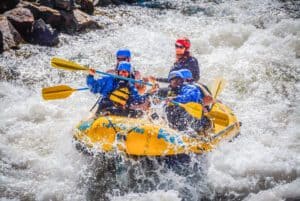
What Not To Wear White Water Rafting
A few items to leave at home:
- Cotton raft clothing – Stays wet, pulls heat, causes chill
- Jeans or heavy denim – Waterlogged and restrictive, dangerously heavy if you enter the water
- Loose jewelry – Rings, necklaces, and bracelets can snag on rafting gear or get lost
- Unsecured footwear – Any shoe that can slip off is a hazard
- Heavy outerwear – A soaked down jacket is cold, heavy, and miserable
Gear Provided By AVA Versus What To Bring Yourself
What AVA Provides
Every AVA white water rafting trip includes a helmet, personal flotation device (PFD), and paddle. On trips where they’re warranted by conditions, we also provide wetsuits and splash jackets. You show up; we equip you.
What Guests Should Bring
Your job is to cover the raft attire side: appropriate base layers, secured footwear, sun protection, and any personal comfort items. We’ll give you a prep checklist when you book so you know exactly what to pack.
Packing For Different Trip Lengths And Types
Half-Day Trip: Keep it simple with a base layer, appropriate footwear, sunscreen, sunglasses with a strap. A wetsuit if conditions call for it (we’ll tell you in advance).
Full-Day Trip: Add a change of clothes to leave in your car, an extra layer for afternoon temperature drops, and a dry bag for anything you want to keep dry on the water (phone, snacks, keys).
Multi-Day/Overnight Adventure: Pack rotating sets of wet and dry layers, warm clothes for camp, sleepwear, and sandals or camp shoes for evenings on shore.
Special Considerations For Kids And Families
Kids lose body heat faster than adults, so when in doubt, add a layer. Make sure their PFD fits snugly, their footwear is secured, and they have a warm layer within reach. A change of clothes in a dry bag, for kids and adults alike, makes post-trip life much easier.
After The Trip: What To Have Ready On Shore
Don’t overlook this one. Set yourself up before you head to the river:
- Dry clothes waiting in the car or at the outpost
- A towel
- Warm layers (a fleece or hoodie goes a long way)
- Comfortable sandals or shoes to change into
- A plastic bag for your wet rafting gear

Your Colorado Rafting Adventure Starts With The Right Gear
Knowing what to wear white water rafting takes one variable off your plate and lets you focus on the experience itself. Whether you’re floating the scenic Colorado River rafting near Kremmling, charging through the Royal Gorge on the Arkansas, or tackling the technical drops on Clear Creek, AVA’s guides and white water gear have you covered. Dress smart, show up ready, and let’s go make some memories.

Meet Mitchell, the newest member of the Outlaw team, who’s always on the lookout for hidden gems—whether that’s in a thrift store, at the most aesthetic coffee shop, or the next marketing campaign! Social media is his one true passion, and writing and telling stories has always accompanied it. When he’s not typing away on his next great story or blog post, you can find him at Wash Park playing grass volleyball or rollerblading at a safe speed.
His motto? “Smile, it’s always in style!” A perfect reminder to keep things light, positive, and full of good vibes—just like his approach to life, marketing, and writing!