If you’re stuck on arches vs canyonlands, you’re in good company. Nearly every first-time visitor to Moab has limited time and two national parks sitting within an easy drive of town. Here’s the short answer our guides give:
Arches suits first-timers, families and short visits. Canyonlands rewards travelers who want big views, solitude and backcountry.
We’re AVA, a Moab outfitter with a local outpost, and we explore Moab adventure trips with visitors all season long. This guide compares size, hiking, crowds, fees and timing so you can pick with confidence.
Arches vs Canyonlands at a Glance
When it comes to arches vs canyonlands, the biggest difference is scale: Arches is compact and easy to sample, while Canyonlands is vast and spread across districts. Here’s the side-by-side view.
| Arches National Park | Canyonlands National Park | |
|---|---|---|
| Size | Compact, with one main paved road | Utah’s largest national park |
| Distance from Moab | About 5 miles north of town | Island in the Sky is closest; the Needles and Maze are much farther |
| Signature sights | Delicate Arch, Double Arch, the Windows, Devils Garden | Mesa Arch, Grand View Point, the White Rim, Chesler Park |
| Hiking style | Many short destination hikes close together | Longer, more spread-out hikes and big overlooks |
| Crowd level | Busier, especially mid-morning through midday | Generally quieter and more remote |
| Best for | First-timers, families, short visits | View-seekers, photographers, backcountry fans |
| Reservations or permits | Permit or ranger-led hike for the Fiery Furnace; permits for backcountry camping | Permits for backcountry camping and White Rim Road |
Arches holds over 2,000 documented arches, while Canyonlands is split into four districts (Island in the Sky, the Needles, the Maze and the rivers) with no roads connecting them inside the park. Planning for arches and canyonlands together mostly comes down to which districts you can realistically fit in.
One more thing before we dive in: neither park is the “wrong” pick. The arches vs canyonlands question is less about quality and more about the kind of day you want, whether that’s a string of quick, jaw-dropping stops or a slower afternoon staring across a canyon. Our guides have taken thousands of visitors through both, and the happiest travelers are the ones who match the park to their energy, their group and their schedule.

What Makes Arches National Park Different
Arches feels compact and approachable. One main paved road runs through the park, the famous formations are a short walk from the pullouts, and you can see the highlights in half a day. Along the scenic drive you’ll pass arches, fins and balanced rocks in a surprising variety, and the road is easy to follow even if you’ve never visited a desert park before.
That simplicity is why we point most first-time visitors here. If you’d like a full rundown of what’s possible, our guide to things to do in Arches National Park covers the stops, trails and viewpoints in more detail.
Most visitors prioritize two zones: the Windows area and Devils Garden. Here’s how each one works.
Delicate Arch, Double Arch and the Windows Section
Delicate Arch is Utah’s most recognizable landmark and the park’s signature hike. The trail is moderate, with steep slickrock and very little shade, so give yourself time and don’t rush the climb. For current trail length and conditions, see the Delicate Arch trail details from the National Park Service.
If you have young kids or just a short window, the Windows Section and Double Arch are our favorites. Both are short, family-friendly walks close to the parking areas, and the payoff is huge for very little effort.
A practical tip from our guides: go early or late in the day for cooler temperatures and softer light, and carry more water than you think you need. The desert is drier than it looks, and the sun adds up fast.
Devils Garden and the Fiery Furnace
Devils Garden sits at the end of the main road. The trail to Landscape Arch is easy and a great turnaround point for first-timers. Beyond it, the primitive loop is longer and rougher, better suited to confident hikers comfortable with some scrambling.
Nearby, the Fiery Furnace is a maze of narrow sandstone fins with no marked trail, which is why access is managed. Devils Garden is also home to the park’s only developed campground, so check current camping rules on NPS.gov if you’re planning to stay inside the park.
Our advice: if you’re newer to desert hiking, enjoy Landscape Arch and head back with energy to spare. If you love route-finding and a longer day, the loop is worth the effort.
Do You Need a Permit for the Fiery Furnace?
Yes, entering the Fiery Furnace requires a permit or a spot on a ranger-led hike, per National Park Service rules. You can choose a self-guided permit if you’re comfortable navigating on your own, or join a ranger-led tour if you’d like someone to show you the way. Confirm current booking details on Recreation.gov, and see the Fiery Furnace permit information before you plan around it.
What Makes Canyonlands National Park Different
Canyonlands is a park of scale. Rivers carved layered canyons and mesas over a very long time, and most views here look down rather than up at formations. Where Arches is about walking up to stone, Canyonlands is about standing on the rim and taking in the whole landscape at once.
The key thing to understand is the four separate districts. Each takes real time to reach, and most visitors with limited time only see Island in the Sky. That’s perfectly fine; it’s a great introduction. You can dig into more ideas in our guide to things to do in Canyonlands National Park.
Canyonlands generally sees fewer visitors than Arches and feels more remote, which is a big part of its appeal. In the arches vs canyonlands debate, this is where travelers who crave quiet usually land.
Island in the Sky District
Island in the Sky is the most accessible district: a high mesa with paved roads and overlooks above the White Rim and the river canyons. The scenic drive is a 34-mile round trip on paved road, with short walks to the top viewpoints, so it works well even if you’re not a hiker.
It’s also the closest Canyonlands district to Moab, which makes it the natural pairing with Arches on a single-day plan. When comparing arches vs canyonlands national park for a short trip, this is the district that makes a combined day realistic. Check the Island in the Sky visitor information for current road and weather updates.
Mesa Arch at Sunrise
Mesa Arch is the most photographed spot in Canyonlands. At sunrise, the underside of the arch glows orange over the canyon below, and it’s easy to see why people line up for it. The walk is a short, easy loop. Arrive well before sunrise, because photographers stake out their spots early. Please stay back from the cliff edge behind the arch and keep a careful eye on kids.
Grand View Point and the White Rim
Grand View Point is the classic panoramic overlook at the end of the Island in the Sky road, reached by a short paved walk. Below the mesa lies the White Rim, a pale sandstone bench that you can see stretching toward the horizon.
The White Rim Road is a backcountry route that requires permits and a high-clearance 4×4. It’s a serious undertaking, so review the White Rim Road permits and conditions before you go.
The Needles District
The Needles is a separate district south of Moab, known for banded sandstone spires and longer day hikes like the Chesler Park loop. It’s best for travelers with a full extra day, since it’s reached by a different road and doesn’t connect to Island in the Sky. It takes noticeably longer to reach from Moab than Island in the Sky, so plan for that when you build your schedule.
The Maze and the Rivers
The Maze is the park’s most remote district, reached on rough 4×4 roads and best suited to experienced, self-sufficient backcountry travelers. Most visitors will never go, and the people who do tend to plan carefully.
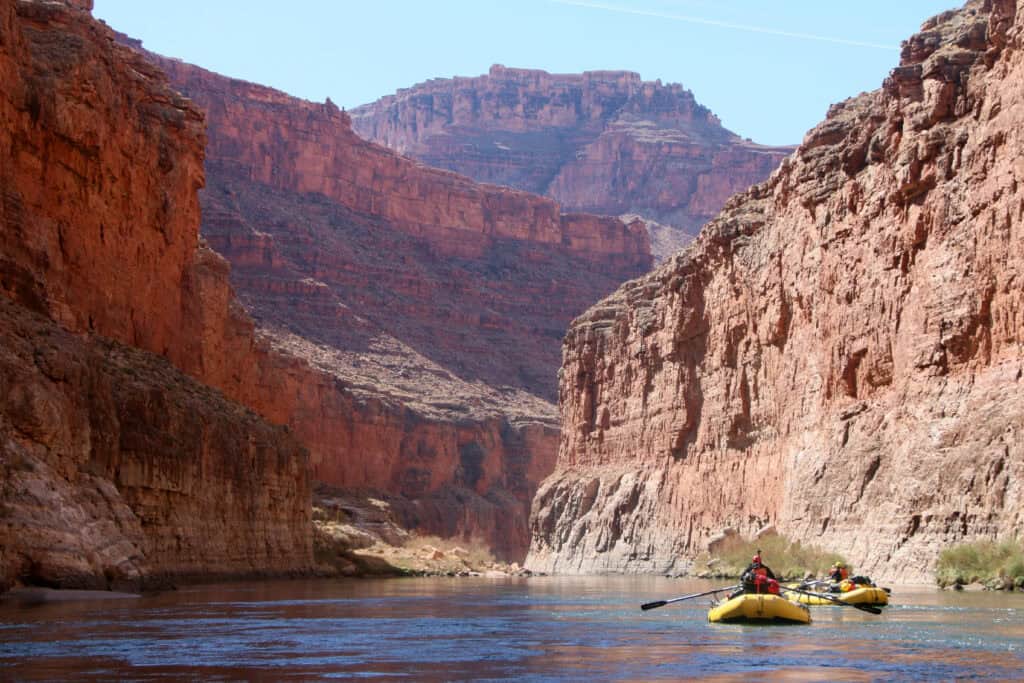
Then there’s the river district. The Colorado and Green rivers meet inside the park and shaped every canyon you look down on from the overlooks. Here’s something many visitors never realize: you can see this canyon country from the water, too.
Seeing Canyonlands From the Colorado River
The river perspective is a total contrast to driving between overlooks. You’ll have towering walls overhead, quiet stretches and wildlife, and a sense of how the whole landscape fits together. To be clear, AVA’s Moab trips run on stretches of the Colorado River near the parks, not inside Canyonlands itself.
Many guests tell us Moab rafting in summer is the coolest way to spend a hot afternoon. If you’d like a gentler paddle, try inflatable kayaks in Moab, or choose Westwater Canyon whitewater if your group wants bigger rapids.
Pairing a Park Day With a Fisher Towers Float
For a simple itinerary, spend the morning in the parks and the afternoon or evening on the river. Our Fisher Towers half-day rafting trip is the easiest add-on. The Arches Sunrise to Sunset Explorer pairs a private morning Arches tour with an evening float on the Fisher Towers stretch.
Staying longer? Look at full-day Fisher Towers rafting or an overnight rafting trip on the Colorado River. Check each trip page for current pricing and age minimums.
Arches vs Canyonlands Utah: Which Has Better Hiking?
Honestly, it depends on the kind of hiker you are. Arches packs many short destination hikes close together, while Canyonlands hikes tend to be longer and more spread out. For trail picks beyond these two parks, our guide to the best hikes in Moab goes deeper.
Think of it as two groups: casual walkers who want big payoffs in small doses, and serious hikers who want miles and quiet. The two sections below break it down. For hiking, the arches vs canyonlands answer really is about how much time and effort you want to spend.
Best Easy and Family-Friendly Hikes
Short walks work well in both parks. Here’s how we’d pick them:
- Arches: The Windows and Double Arch, which are close to parking and easy for little legs.
- Canyonlands: Mesa Arch and Grand View Point, which are short walks to huge views.
If you’re planning an arches and canyonlands family vacation, mix one park of each with some downtime. Families staying longer can find more ideas in our guide to things to do in Moab with kids.
Longer Hikes and Backcountry Trips
Fitter hikers have great options too: the Devils Garden primitive loop in Arches, plus Needles day hikes and overnight trips in Canyonlands. Overnight backcountry camping in both parks requires a permit, so confirm current rules on NPS.gov before you commit.
A few desert basics: start early, carry plenty of water, and know the forecast before hiking on slickrock. Conditions change quickly, and a plan B is always smart.
A quick note on packing, since it applies to both parks. Bring a refillable water bottle for each person, sun protection, sturdy closed-toe shoes with good grip, and a light layer for early mornings and evenings. Cell service is limited in much of the area, so download offline maps before you leave Moab. These small habits matter more in the arches vs canyonlands conversation than most people expect, because the desert rewards the prepared and humbles the rest.
Crowds, Entry and Fees in 2026
The biggest change this year: Arches dropped its timed-entry reservation system for 2026, so visitors can enter any time during open hours. The trade-off is that without timed entry, you should expect entrance lines and full parking lots from mid-morning through midday in peak season.
Canyonlands has no timed entry and usually feels less crowded. Both parks still require an entrance fee or a valid park pass. Arches and Canyonlands also aren’t on the 2026 list of parks charging the new $100 nonresident surcharge. Always confirm the latest rates, and see current Arches entrance fees and passes for details.
If parking and route planning sound stressful, a guided Arches National Park scenic tour lets someone else handle it while you enjoy the views.
Best Time of Year to Visit Each Park
Spring and fall are the most comfortable seasons for hiking both parks. Summer brings intense heat and very little shade, so plan around it. In summer, explore at sunrise, rest during the middle of the day, and return to the parks or the river in the evening.
Both parks are designated International Dark Sky Parks, so an evening or night visit is worth planning. Stargazing here is a highlight many guests remember long after the trip. Conditions vary from year to year, so check NPS or NOAA climate information for what to expect during your dates.
How Far Apart Are Arches and Canyonlands?
If you’re wondering how far is canyonlands from arches, the answer is close enough for a combined day, but far enough that you’ll notice the drive. Everything starts from Moab, and the distances to each entrance look like this:
- Moab to Arches entrance: about 5 miles north of town, a short drive.
- Moab to Island in the Sky: roughly 40 minutes.
- Moab to the Needles: well over an hour, on a different road.
Going from Arches to Island in the Sky is the easier pairing. The trip from Arches National Park to Canyonlands National Park’s other districts takes much longer. When you map out arches to canyonlands logistics, build in extra time for stops, traffic and photos.

Can You Do Arches and Canyonlands in One Day?
Can you do arches and canyonlands in one day? Yes, if you pair Arches with Island in the Sky and accept that you’ll see highlights only. It makes for a full but rewarding itinerary. Here’s a simple version:
| Time of day | Plan |
|---|---|
| Sunrise | Mesa Arch |
| Morning | Grand View Point |
| Midday | Lunch and a break in Moab |
| Afternoon or evening | Arches: the Windows, Double Arch or Delicate Arch |
With two days, the itinerary relaxes. Add the Needles or spend a day on the river. Seeing an arch and canyonlands viewpoint on the same day is possible, but it’s more enjoyable when you aren’t racing the clock.
For where to stay near arches and canyonlands national parks, we recommend Moab as your base. It’s central to everything, with plenty of places to eat, rest and plan the next day.
Which Park Should You Choose?
For most people weighing arches vs canyonlands, the right choice depends on who’s traveling. Here’s how we’d break it down:
- First-timers and families: Arches.
- Photographers and view-seekers: Canyonlands.
- Hikers wanting solitude: the Needles.
- Adventurers: both parks, plus the river.
If you’re still torn between arches or canyonlands, remember you don’t have to treat it as a strict contest. Canyonlands vs arches is really a question of pace: quick highlights or long, quiet views.
Our guides usually tell first-time Moab visitors to start with Arches, then add a river day to see the country from a different angle.
Whichever way you lean, remember that Moab is built for flexibility. If the weather turns, a park looks crowded, or your group runs out of steam, you can swap plans without losing the trip. That’s the real takeaway of the arches vs canyonlands decision: pick a starting point, stay curious, and let the landscape do the rest. Many of our guests change their minds halfway through their stay, and they tell us it’s part of the fun.
Make It a Moab Adventure With AVA
We meet our guests at the AVA Moab Outpost, the starting point for our Moab trips. It’s a friendly spot to ask questions, check gear and get oriented before heading out.
A guided park tour and a Colorado River trip fit together nicely for a full Moab stay: park time in the morning, river time later in the day. Whether you choose arches and canyonlands national parks, the river, or all three, we’re glad to help you plan. Take a look at our trips and book the one that fits your group.

Arches vs Canyonlands FAQs
Which is better for a first visit?
For most first-timers, Arches is the easier choice. It has one main paved road, short walks to famous formations and highlights you can see in half a day. In the arches vs canyonlands decision, Canyonlands suits travelers who want big views and more solitude.
Do you need reservations in 2026?
Arches dropped timed entry for 2026, so you can enter during open hours, and Canyonlands has no timed entry. Both parks require an entrance fee or pass. Some activities, like the Fiery Furnace and backcountry camping, still require permits, so confirm details on NPS.gov.
Which park is less crowded?
Canyonlands generally sees fewer visitors than Arches and feels more remote. Arches tends to fill up from mid-morning through midday in peak season, so visiting early or late helps. In the arch vs canyonlands comparison, Canyonlands is the quieter option.
Can kids hike in both parks?
Yes. Families can enjoy short walks in both parks, such as the Windows and Double Arch in Arches, and Mesa Arch and Grand View Point in Canyonlands. Delicate Arch is a moderate hike with steep slickrock and little shade, so plan ahead and bring plenty of water.

Meet Mitchell, the newest member of the Outlaw team, who’s always on the lookout for hidden gems—whether that’s in a thrift store, at the most aesthetic coffee shop, or the next marketing campaign! Social media is his one true passion, and writing and telling stories has always accompanied it. When he’s not typing away on his next great story or blog post, you can find him at Wash Park playing grass volleyball or rollerblading at a safe speed.
His motto? “Smile, it’s always in style!” A perfect reminder to keep things light, positive, and full of good vibes—just like his approach to life, marketing, and writing!